Choosing a preschool in Bellevue, TN, involves considering how teachers support emotional development alongside early learning. For toddlers, everyday experiences such as separating from parents, sharing materials, and adjusting to classroom routines can bring strong feelings. Conscious Discipline and emotional coaching offer approaches that help adults respond calmly, acknowledge emotions, and guide children toward appropriate ways to express their needs.
Through supportive relationships and consistent guidance, young children can begin developing emotional awareness, confidence, and positive connections with others. Understanding these approaches can help West Nashville families see how thoughtful emotional support contributes to a secure, engaging early learning experience.
How a West Nashville Child Care Center Can Create Emotional Safety
Emotional safety develops when children experience adults as reliable sources of comfort, guidance, and protection. For toddlers, this means knowing that a teacher will respond to distress, explain unfamiliar situations, and maintain clear boundaries without shaming them. A West Nashville child care center can support this sense of security through thoughtful interactions and predictable daily experiences.
Begin With a Calm Adult Response
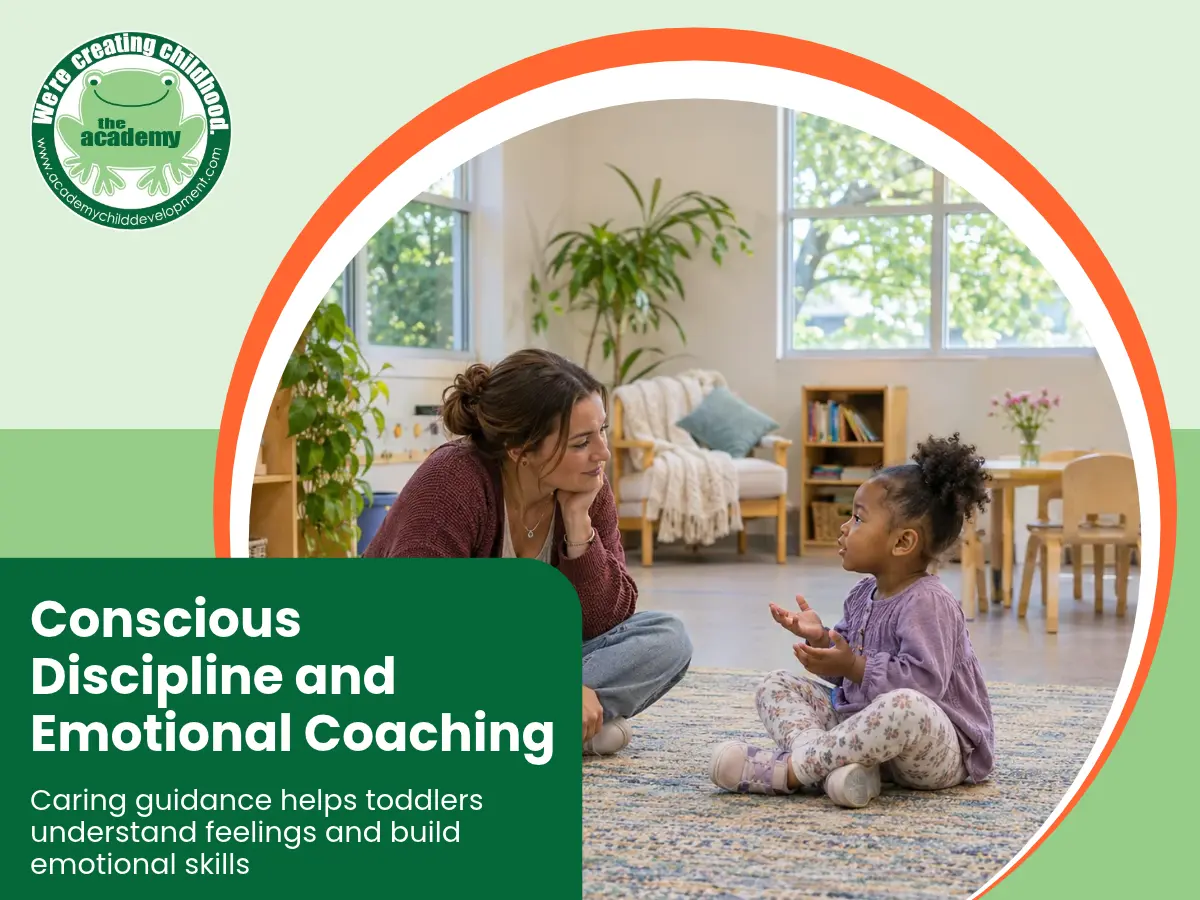
A toddler who cries during drop-off or becomes upset when playtime ends needs an adult who can remain composed. Within Conscious Discipline, adults’ ability to regulate their own responses is central to helping children feel safe.
Teachers can pause, soften their tone, and move to the child’s level before offering guidance. A brief acknowledgment, such as “You wanted more time to play,” communicates understanding while allowing the adult to maintain the next step in the routine.
Make the Day Easier to Understand
Toddlers cannot always anticipate what will happen next. Familiar sequences and simple explanations help make classroom experiences more manageable.
Practical supports may include:
- Consistent greetings: A familiar welcome gives children a dependable starting point.
- Visual routines: Pictures can show the sequence of meals, play, rest, and outdoor time.
- Transition reminders: A short warning before cleanup gives children time to prepare.
- Accessible comfort: A quiet space with adult support offers somewhere to pause when activities feel overwhelming.
These supports should remain flexible enough to accommodate individual needs.
Pair Acceptance With Clear Boundaries
Emotional safety does not require removing every frustration. Children need adults who accept their feelings while preventing unsafe behavior.
A teacher might say, “You are upset. I will not let you hit,” then stay nearby and help the child settle. The message remains consistent: feelings are accepted, safety matters, and support is available. Repeated experiences like these help make the classroom a dependable place to explore and learn.
The Academy of McCrory Lane’s Approach to Early Learning and Development
The Academy of McCrory Lane describes its Nashville setting as a nurturing environment where children receive care, encouragement, and consistent routines. Its emphasis on dependable care, enrichment, and early learning provides a foundation for considering how children grow across several connected areas, including communication, independence, and social confidence.
Connecting Learning With Everyday Experiences
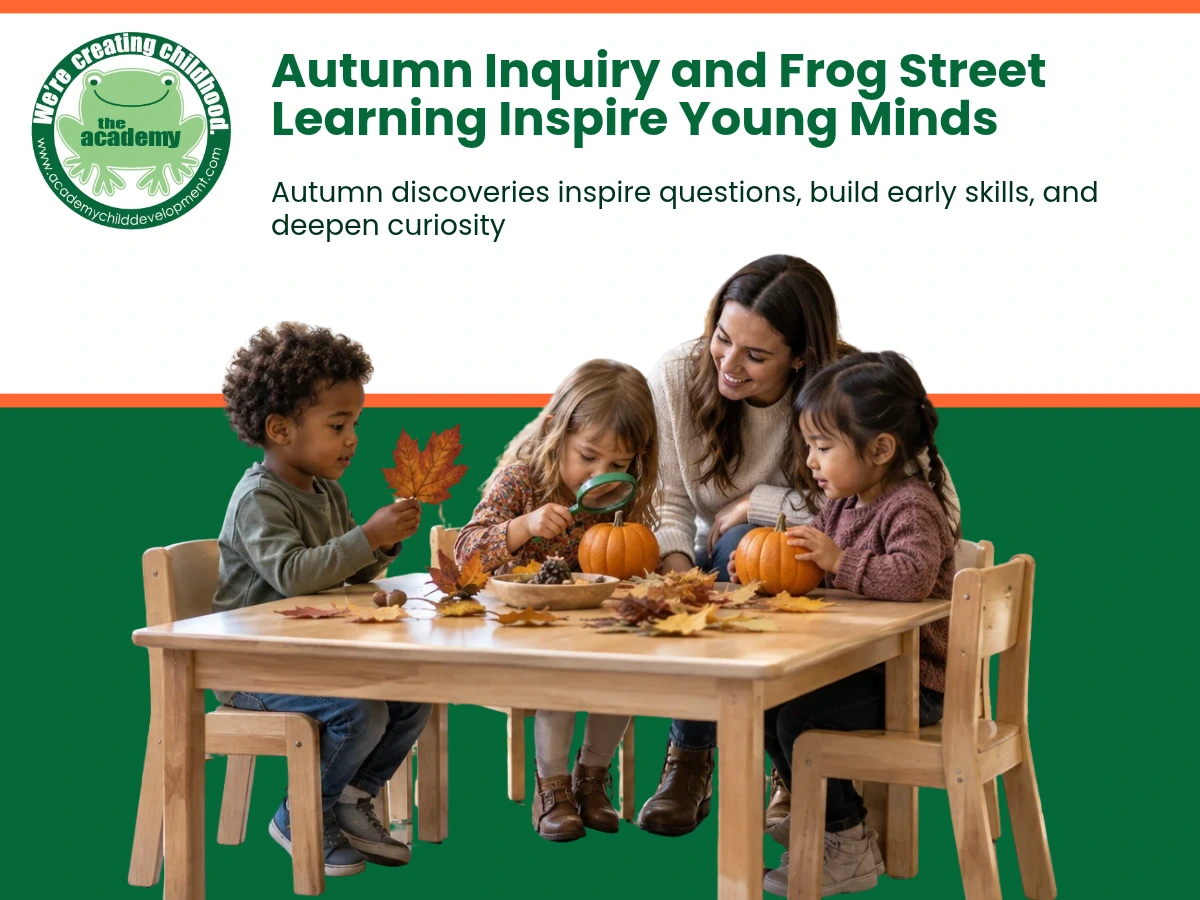
Across The Academy, the Frog Street curriculum supports language, cognitive development, and social-emotional learning through hands-on activities. The curriculum combines planned learning with opportunities to explore, allowing children to build skills through meaningful participation.
For toddlers, this connection matters because learning often happens during ordinary moments. Choosing materials, listening to a short story, or completing a simple task can involve several developing abilities at once. A child may need to communicate a preference, sustain attention, and accept assistance within the same experience.
Supporting Each Stage of Development
The Academy’s curriculum page identifies movement, discovery, language, and growing independence as priorities for toddlers. Preschool learning extends these foundations through early literacy, group participation, cooperation, and classroom responsibility.
These priorities offer families a useful way to understand readiness. Progress includes practical abilities such as:
- Expressing needs: Using a gesture or word to request assistance.
- Participating with others: Becoming involved in a shared activity.
- Approaching challenges: Trying an unfamiliar task with support.
- Developing independence: Taking an increasing role in everyday responsibilities.
These examples illustrate developmental goals rather than a specific classroom schedule.
Understanding the Whole Learning Experience
For families considering a preschool in Bellevue, TN, a visit offers an opportunity to see how these priorities show up in practice. Questions about teacher guidance, age-appropriate expectations, and classroom participation can help parents understand the setting.
Together, these elements give families a fuller picture of early education, with emotional development alongside physical, social, and academic growth.
Supporting Toddler Emotional Regulation in Daycare Through Emotional Coaching
Supporting toddler emotional regulation in daycare involves helping children gradually recognize feelings and respond to them with adult guidance. Emotional coaching gives these experiences a clear focus: notice the emotion, acknowledge what happened, and introduce a manageable next step. The aim is to build understanding and coping skills over time.
Give Feelings Meaningful Names
Emotion words become more useful when adults connect them to an experience. If a toddler’s block tower falls, a teacher might say, “You worked hard on that tower. You seem disappointed.”
This language offers a possible explanation without demanding that the child speak immediately. Teachers can observe the response and adjust their interpretation. A toddler may need quiet company before being ready to engage.
Positive feelings deserve attention too. Noticing excitement, pride, and contentment helps children develop a broader emotional vocabulary.
Match Support to the Moment
A distressed toddler may struggle to follow a lengthy explanation. Emotional coaching works best when the adult keeps guidance brief and responsive to the child’s needs.
For example, after the tower falls, support might include:
- Acknowledgment: Recognize the child’s effort and disappointment.
- Time to settle: Remain available without rushing the child to rebuild.
- A simple choice: Offer help restarting or suggest another activity.
- Later reflection: Revisit what happened once the child is receptive.
The teacher’s role is to make the next step accessible, rather than expect an immediate independent solution.
Practice Skills During Calm Activities
Books, puppets, and pretend play can provide opportunities to explore emotions when children are comfortable. A teacher might pause during a story to discuss how a character feels or model how to ask for help.
Progress can be subtle. A child might begin seeking an adult, naming a feeling, or accepting support more readily. These developing responses deserve recognition without expecting toddlers to manage every difficult moment independently.
Using Conscious Discipline Principles to Guide Peer Conflicts
Peer disagreements create opportunities for toddlers to practice communication, boundaries, and problem-solving with adult support. Conscious Discipline emphasizes adult composure, connection, and teaching useful skills. Applied to conflict, these principles help educators guide children through a disagreement while keeping everyone safe.
Describe What Happened Without Assigning Labels
Consider two toddlers reaching for the same toy truck. One pulls it away, and the other pushes. The adult’s first responsibility is to prevent further harm and attend to the child who needs comfort.
Once the children can engage, a neutral description can clarify the situation: “You both wanted the truck. There was pulling and pushing.”
Describing observable actions avoids labeling either child as unkind or difficult. It also gives the teacher a starting point for explaining what each child can do differently.
Teach a Specific Alternative
Conscious Discipline encourages adults to focus on the action they want children to learn and to model that action clearly.
For toddlers, the alternative should be simple enough to practice with assistance:
- Request a turn: Model a short phrase such as “Turn, please.”
- Communicate a boundary: Demonstrate “Stop” alongside an appropriate gesture.
- Seek assistance: Show children how to approach a teacher.
- Choose another option: Help locate an available toy while a peer finishes.
Children who use few words may need gestures and direct adult assistance. Repetition remains part of the learning process.
Support Repair and a Return to Play
After a disagreement, the teacher can help children take a practical step toward repair. This might involve returning a toy, rebuilding a damaged structure, or checking whether a classmate needs help.
A prompted apology alone provides little practice in resolving the original problem. Supported action helps children understand how their choices affect others and how they can contribute to a more positive interaction.
Conclusion
Emotional growth becomes visible in small moments: a toddler seeking help, expressing disappointment, or returning to play after a disagreement. Conscious Discipline principles and emotional coaching offer ways for adults to support these developing abilities through calm guidance, clear expectations, and respectful relationships. Each supported experience gives children another opportunity to practice skills they will continue building throughout childhood.
For families choosing a preschool in Bellevue, TN, understanding how educators respond to these moments can provide valuable insight into a child’s daily experience. A setting that recognizes emotional development as part of learning helps create space for confidence, connection, and growing independence.
Explore your child’s next step with The Academy of McCrory Lane. Call 615-805-6747 or enquire at https://www.academychilddevelopment.com/contact/ to arrange a visit.