Thompson’s Station preschools provide young children with valuable opportunities to strengthen fine motor skills through purposeful play, exploration, and everyday learning experiences. From grasping crayons and building with blocks to completing puzzles and managing simple self-care tasks, children use the small muscles in their hands and fingers throughout the day.
These abilities support much more than physical coordination. They also build independence, confidence, creativity, and readiness for future classroom activities. When active learning is thoughtfully incorporated into daily routines, children can practice important movements naturally while discovering new interests, solving problems, and gaining greater control over their developing skills.
How Thompson’s Station Child Care Builds Coordination Through Daily Routines
Quality Thompson’s Station child care offers many opportunities for children to develop coordination without separating skill-building from the natural rhythm of their day. Fine motor development often happens through familiar tasks that encourage children to grasp, hold, twist, stack, pour, fasten, and manipulate objects with increasing control.
Everyday Opportunities for Growing Hands
Simple classroom routines can become meaningful learning experiences. Children may practice hand and finger control as they put away materials, turn book pages, open containers, use child-sized utensils, or choose items during an activity.
These experiences can help strengthen:
- Hand and finger muscles
- Hand-eye coordination
- Bilateral coordination, or using both hands together
- Grip control and precision
- Confidence with everyday tasks
Because these movements connect to activities children already enjoy or need to complete, practicing them can feel natural and purposeful.
Encouraging Independence Through Practice
Fine motor skills also support a child’s growing desire to do more independently. Tasks such as putting on a jacket, carrying a cup, cleaning up materials, or attempting to manage simple fasteners give children opportunities to practice persistence.
Not every attempt will be successful right away, and that is an important part of learning. With patient encouragement, children can discover that repeated effort leads to improvement.
Turning Routine Into Development
A thoughtfully planned preschool day allows learning to happen during transitions, play, meals, creative activities, and classroom responsibilities. Rather than limiting development to a single lesson, educators can recognize opportunities throughout the day to encourage children to use their hands with purpose.
These repeated experiences gradually strengthen coordination while helping children become more capable and confident in managing age-appropriate tasks.
How Daycare Services in Thompson’s Station, TN, Encourage Active Play
Daycare services in Thompson’s Station, TN can support fine motor growth by giving children opportunities to move, explore, and interact with their surroundings. Although fine motor skills focus on smaller hand and finger movements, they develop alongside broader physical abilities such as balance, posture, shoulder stability, and overall coordination.
Connecting Movement With Hand Control
Active play gives children opportunities to strengthen the larger muscle groups that support more precise hand movements. Activities that involve reaching, carrying, pushing, pulling, climbing, or collecting objects can help children develop greater control over their bodies.
For example, a child might gather natural materials during outdoor exploration, carry objects to a play area, or reach for pieces while completing a physical challenge. Each experience combines movement with coordination and decision-making.
Learning Through Hands-On Exploration
Children are naturally drawn to experiences they can touch and manipulate. Active learning may include arranging loose parts, sorting objects, transferring materials between containers, or building structures.
These activities invite children to experiment with pressure, positioning, movement, and spatial awareness. They also let children choose how to use materials.
Making Physical Development Enjoyable
Young children benefit from opportunities to practice skills in varied ways rather than repeating the same movement in isolation. One activity may require a careful pincer grasp, while another involves squeezing, stacking, threading, or placing objects precisely.
Offering different forms of active play can keep children engaged while strengthening a broad range of abilities. Over time, greater control of the hands and body can support participation in creative work, classroom routines, self-care, and future academic tasks.
Supporting Fine Motor Development in Thompson’s Station Through Creative Learning
Creative experiences can encourage fine motor development in Thompson’s Station by inviting children to explore materials while strengthening the movements needed for greater hand control. Art, sensory exploration, construction, and other hands-on activities offer opportunities to practice coordination while letting children make choices and express their ideas.
Creativity With a Developmental Purpose
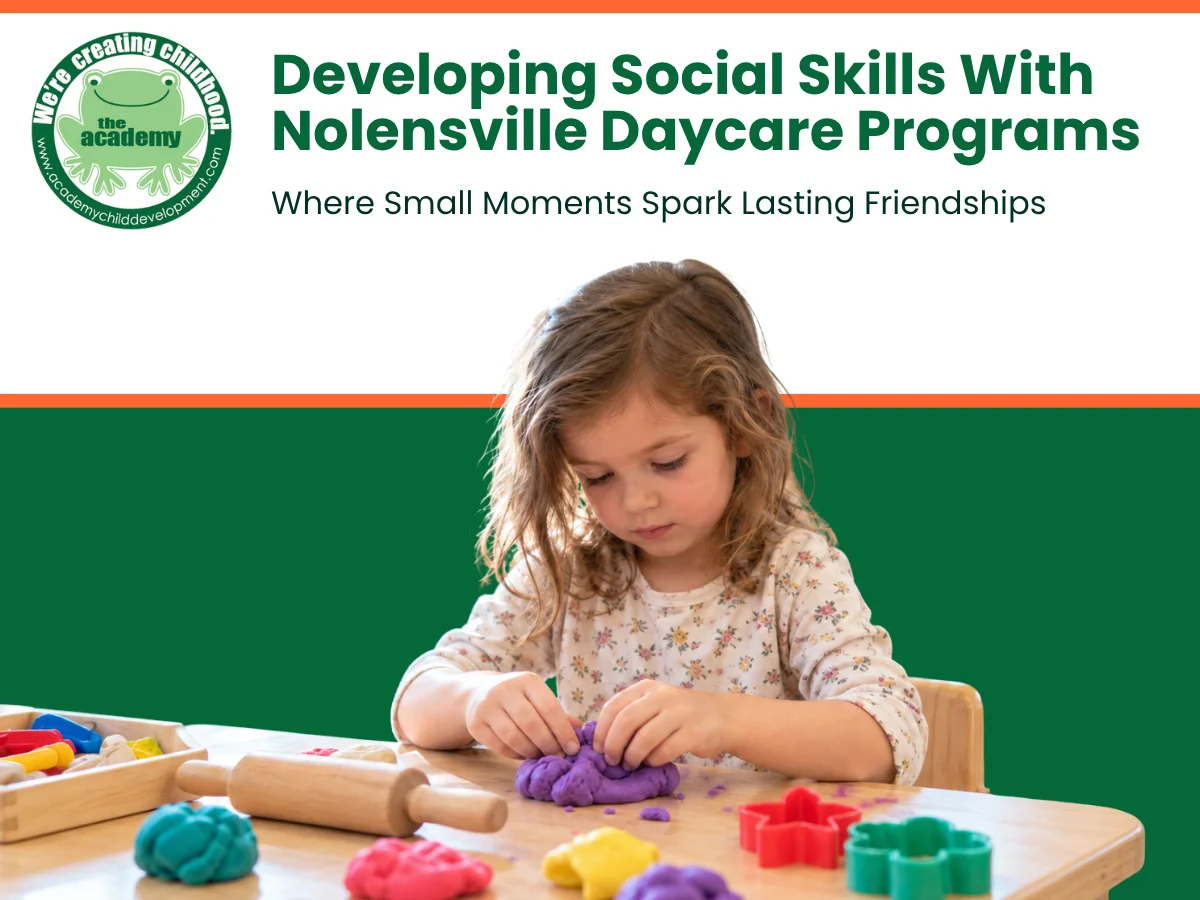
Creative activities can involve a wide variety of movements. Holding a paintbrush requires a different type of control from shaping dough, placing stickers, connecting blocks, or tearing paper for a collage.
Children may develop fine motor skills through activities such as:
- Drawing, painting, and coloring
- Molding and squeezing soft materials
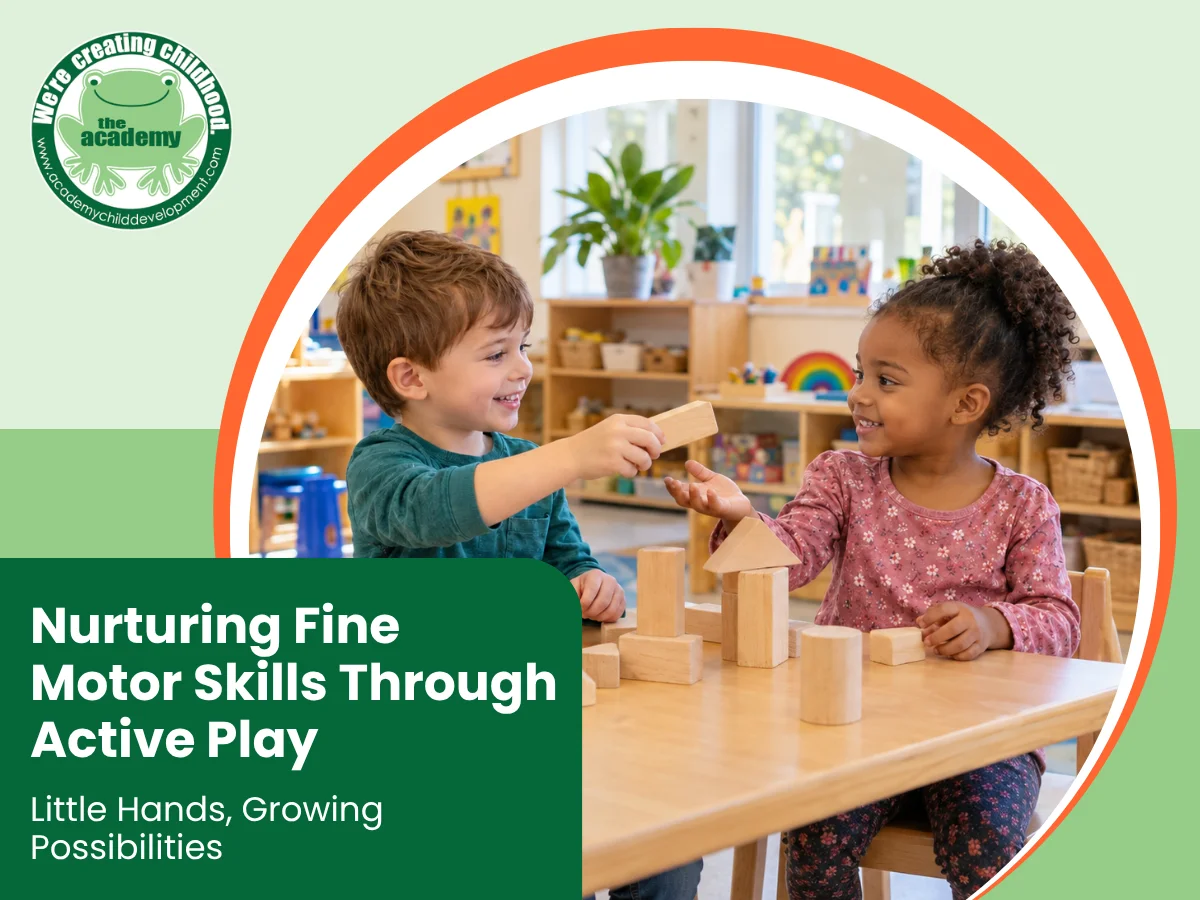
- Building with blocks and connecting pieces
- Completing age-appropriate puzzles
- Sorting and placing small learning materials
- Threading, scooping, and transferring objects
Each activity provides a different challenge for developing hands.
Strengthening Hand-Eye Coordination
Creative play also encourages children to coordinate what they see with how they move their hands. Placing a puzzle piece in the correct space, drawing a line toward a chosen point, or balancing one block on another requires attention and controlled movement.
As children repeat these experiences, their actions can gradually become more accurate and deliberate.
Giving Children Space to Explore
Creative learning is especially valuable when children have opportunities to experiment rather than focus only on a finished product. Choosing materials, testing ideas, adjusting movements, and trying again supports both physical and cognitive development.
This combination of creativity and purposeful practice helps children build coordination while developing curiosity, persistence, and confidence in their own abilities.
Building Independence Through Fine Motor Confidence
As children’s fine motor control strengthens, many everyday activities become more manageable. Better coordination helps children participate more independently in classroom routines, creative experiences, self-care tasks, and early learning activities.
From Practice to Growing Confidence
Children often take pride in completing a task that previously required assistance. Successfully stacking a challenging structure, using drawing tools with greater control, or managing part of a dressing routine can provide a meaningful sense of accomplishment.
Educators can support this growth by giving children enough time to try tasks themselves while remaining available when they need guidance. Encouragement focused on effort and persistence can help children understand that skills develop gradually.
Preparing for Future Learning
Fine motor development also supports skills children will use as they progress toward kindergarten and beyond. Controlling writing tools, handling classroom materials, turning pages, cutting with child-safe scissors, and completing hands-on learning tasks all require coordination.
Strong fine motor foundations can make it easier for children to focus on what they are learning rather than concentrating entirely on the physical challenge of using the materials.
Supporting the Whole Child
Developing hand control is not simply about preparing children to write. Fine motor experiences can also encourage problem-solving, concentration, creativity, independence, and perseverance.
When children have frequent opportunities to explore, practice, and succeed at developmentally appropriate tasks, they can build skills that support many areas of daily life. Patient guidance and purposeful play allow this progress to happen at an individual pace while helping each child feel increasingly capable.
Conclusion
Fine motor development takes place gradually through the many hands-on experiences children encounter each day. Building, creating, exploring, manipulating materials, and participating in everyday routines all give young children opportunities to strengthen coordination while becoming more independent.
A nurturing preschool environment can make these experiences purposeful while keeping learning active and engaging. With varied opportunities to practice and supportive guidance from educators, children can develop the hand control, persistence, and confidence needed for both everyday tasks and future classroom experiences.
To explore preschool and child care options, visit https://www.academychilddevelopment.com/contact/ or call 615-805-6610.