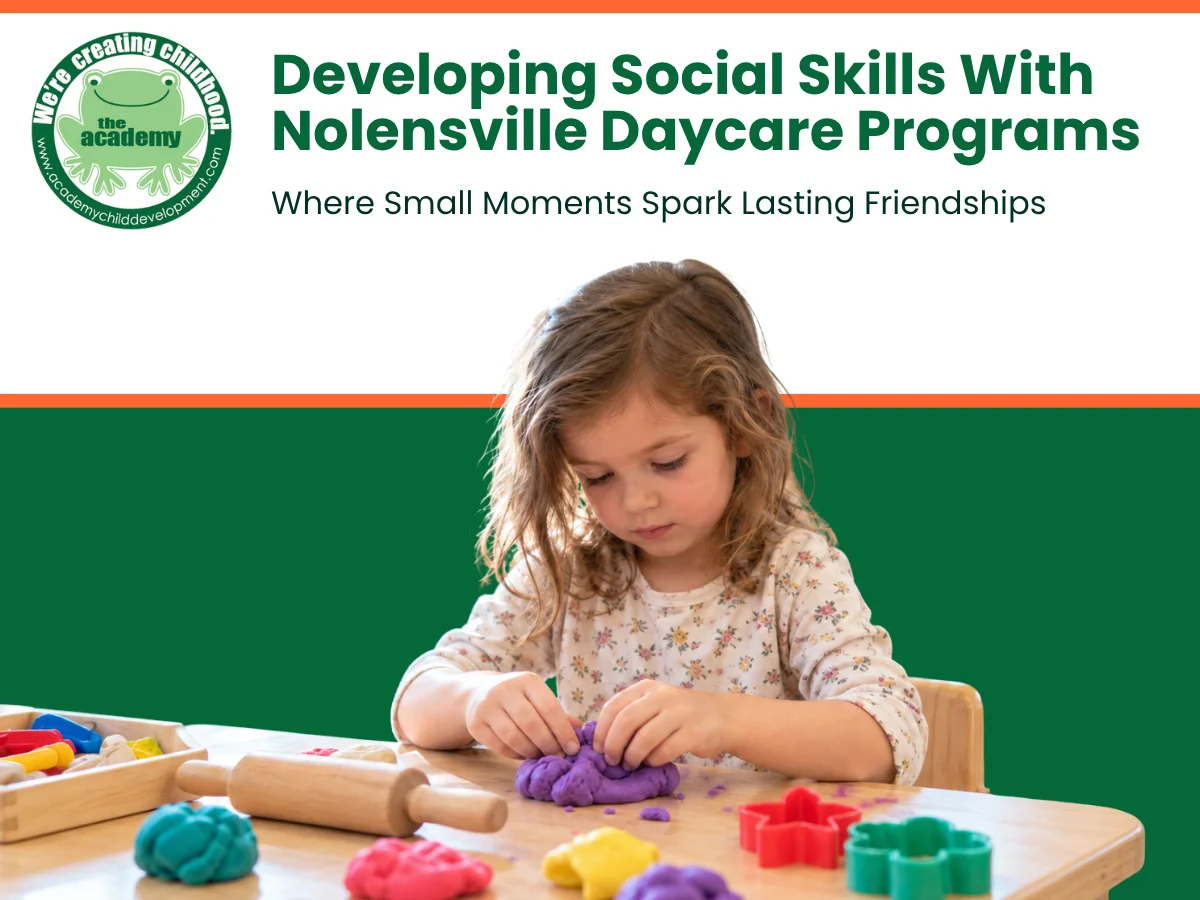
Nolensville daycare programs play an important role in helping young children develop the social skills they need to build positive relationships. During the early years, everyday interactions with peers create valuable opportunities to practice sharing, taking turns, communicating feelings, cooperating, and resolving small conflicts.
In a nurturing daycare environment, children can form friendships while developing confidence, empathy, and a stronger sense of belonging. With guidance from caring educators and plenty of opportunities for group play and shared experiences, children gradually learn how to connect with others in meaningful ways, creating an important foundation for future social and emotional development.
How Toddler Social Development in Nolensville Begins Through Everyday Interaction
Toddler social development in Nolensville is shaped by the many small interactions children experience throughout the day. From greeting friends in the morning to joining group activities, young children constantly learn how to communicate, cooperate, and understand others’ feelings. A supportive daycare environment gives toddlers regular opportunities to practice these important skills while feeling safe, encouraged, and valued.
Learning to Share and Take Turns
Sharing does not always come naturally to toddlers, so guided practice is especially valuable. During play, children begin to understand that they can enjoy toys, materials, and spaces together. Educators can support this process by modeling patience, encouraging turn-taking, and helping children find simple solutions when disagreements arise.
Over time, these experiences help children develop:
- Patience while waiting for a turn
- Respect for other children’s needs
- Confidence when joining group activities
- An understanding of cooperation and fairness
Building Communication Skills Through Play
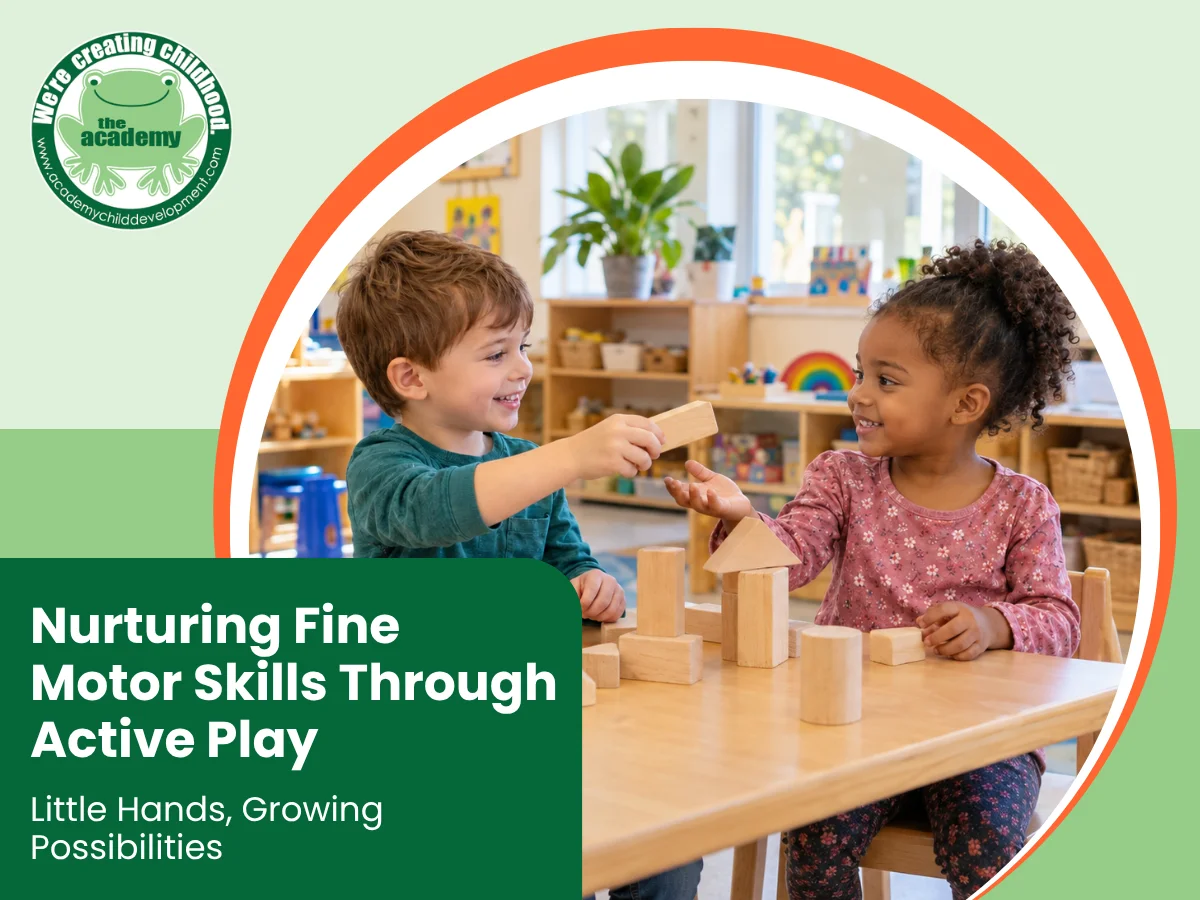
Play provides children with countless opportunities to communicate. Whether they are building with blocks, engaging in imaginative play, or participating in a group activity, toddlers learn to express ideas, listen to others, and respond appropriately.
Educators can encourage language development by asking thoughtful questions, introducing new vocabulary, and helping children communicate their needs clearly. These everyday exchanges support both social confidence and stronger relationships with peers.
Recognizing and Expressing Emotions
Learning to understand emotions is another important part of early social development. Toddlers may experience excitement, frustration, disappointment, or uncertainty throughout the day. With caring guidance, they can begin to identify these feelings and learn appropriate ways to express them.
By naming emotions, offering reassurance, and demonstrating respectful responses, educators help children develop empathy and emotional awareness. These early skills create a strong foundation for positive friendships, healthy communication, and successful interactions as children grow.
Supporting Nolensville, TN, Child Development Through Group Learning
Nolensville, TN child development is strengthened when young children have regular opportunities to learn alongside their peers. Group learning introduces children to shared experiences that encourage cooperation, communication, confidence, and respect for others. Whether children are completing a creative activity, listening to a story, or exploring a new concept together, these moments help them understand how to participate positively within a community.
Encouraging Cooperation in Small Groups
Small group activities give children the chance to work toward a shared goal while learning how their actions affect others. Educators can guide children as they share materials, exchange ideas, and take turns contributing.
These experiences can help children practice important social skills such as:
- Listening while another child is speaking
- Offering help and accepting support
- Taking turns with shared resources
- Working together to complete an activity
Repeated opportunities to cooperate can make these behaviors feel more natural over time.
Developing Confidence Through Participation
Group learning also gives children a supportive setting in which to express themselves. A child may contribute an idea during a discussion, demonstrate a skill during an activity, or join a game with classmates.
Positive encouragement from educators can help children feel more comfortable participating and communicating with others. As confidence grows, children may become more willing to try unfamiliar activities, ask questions, and interact with new peers.
Learning From Different Personalities and Perspectives
Every child brings individual interests, communication styles, and ways of approaching play. Spending time in a group helps children discover that others may think, feel, and respond differently.
With thoughtful guidance, children can learn to respect these differences while developing empathy and flexibility. These early experiences support stronger peer relationships and help children become more comfortable navigating a variety of social situations as they continue to grow.
How Child Care Socialization in Nolensville Supports Early Friendships
Child care socialization in Nolensville gives young children regular opportunities to form connections with their peers in a safe, supportive setting. Early friendships often begin with simple shared experiences, such as playing side by side, joining group activities, or enjoying familiar routines together. These interactions help children learn how to approach others, respond to social cues, and build trust over time.
Creating Opportunities for Meaningful Peer Connections
Friendships develop gradually, especially during the early years. Daycare provides children with consistent opportunities to spend time with the same peers, helping familiar faces become trusted companions.
Through play and shared activities, children can begin to discover common interests and learn how enjoyable cooperation can be. Experiences such as building together, creating artwork, listening to stories, or joining imaginative games can encourage natural interaction without pressuring children to socialize in a particular way.
Building Trust and a Sense of Belonging
Feeling secure within a group can make it easier for children to participate, communicate, and form relationships. Consistent routines, caring educators, and positive peer experiences all contribute to a stronger sense of belonging.
Over time, children may become more comfortable:
- Joining activities already in progress
- Inviting another child to play
- Asking for help when needed
- Expressing preferences and ideas
- Celebrating another child’s success
These small moments help build confidence and strengthen social bonds.
Practicing Kindness and Consideration
Early friendships also provide an important setting for learning empathy. Children begin to notice when a peer is upset, excited, or needs support. With guidance from educators, they can practice thoughtful responses such as offering a toy, waiting patiently, or using kind words.
These everyday experiences help children understand that positive relationships are built through respect, care, and cooperation. As these skills develop, children build a stronger foundation for healthy friendships in daycare and future classroom settings.
The Role of Educators in Guiding Positive Social Experiences
Educators play an important role in helping young children understand how to communicate, cooperate, and build healthy relationships. In a daycare setting, social development happens throughout the day, and attentive educators can turn everyday interactions into valuable learning opportunities. By offering guidance while still allowing children to explore relationships independently, educators help create an environment where positive social skills can grow naturally.
Modeling Respectful Communication
Young children learn a great deal by observing the adults around them. When educators use calm language, listen carefully, and respond patiently, they show what respectful communication looks like.
Simple actions can have a meaningful impact, including:
- Greeting children warmly
- Listening when a child is speaking
- Using polite and encouraging language
- Acknowledging different feelings and viewpoints
- Demonstrating appropriate ways to solve problems
Through consistent modeling, children begin to understand how their words and actions can affect others.
Helping Children Navigate Social Situations
Disagreements and misunderstandings are a natural part of early childhood. Rather than solving every problem for children, educators can guide them toward appropriate responses. This might involve helping a child explain what happened, encouraging both children to listen, or suggesting ways to take turns and share.
These moments give children practical experience with conflict resolution, patience, and emotional regulation. Over time, they become better equipped to manage similar situations more independently.
Encouraging Inclusive and Supportive Play
Educators can also help ensure that children feel welcomed and included during play. Some children may join a group confidently, while others may need gentle encouragement or support.
By thoughtfully arranging group activities, introducing children to one another, and recognizing opportunities for shared interests, educators can help create positive connections. This guidance supports a classroom culture where children learn to include others, cooperate with peers, and value being part of a caring community.
Conclusion
Early friendships help children develop skills that extend far beyond daycare. Through daily interaction, group learning, guided play, and support from caring educators, young children begin to understand cooperation, empathy, communication, and respect. These experiences can strengthen confidence while helping children feel connected to the people and environments around them.
To learn more about Academy Child Development in Nolensville, contact the team or call 615-805-6131 to explore care options for your child.