

What To Look For When Touring A Child Care Center In The New Year
Child care tour tips for new year enrollment can help families make a confident decision during one of the busiest times of year for childcare inquiries. A well-planned tour gives you a clear view of what daily life in the classroom looks like, how teachers interact with children, and how the program supports safety, learning, and communication with families.
It also helps you compare options more effectively, especially when openings can fill quickly after the holidays. By knowing what to look for and what questions to ask, you can focus on the details that matter most for your child’s comfort, growth, and long-term success.
Daycare Tour Checklist For A Strong First Impression
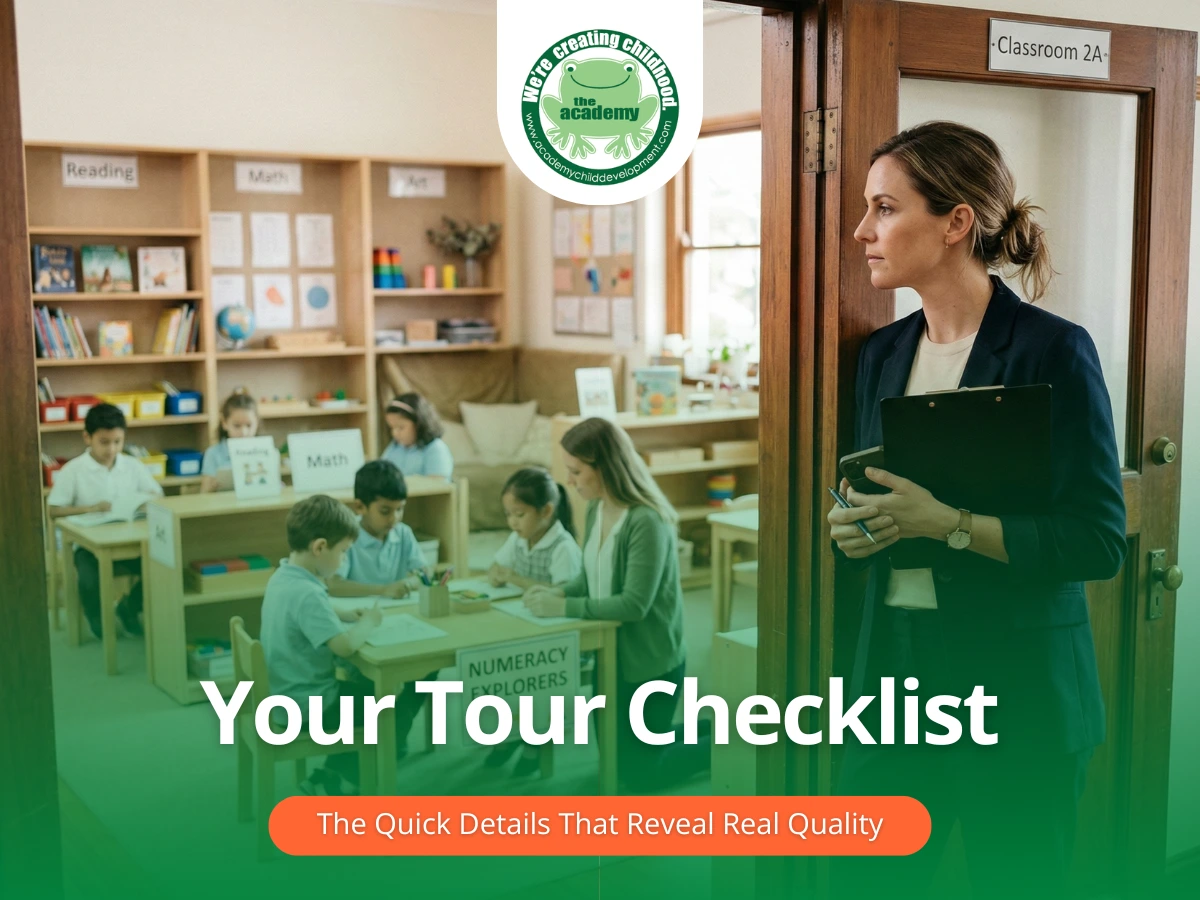
A tour is often the clearest way to understand how a child care center operates day to day. The goal is not to evaluate a perfect classroom moment, but to confirm that the environment is safe, supportive, and well-run. Use this daycare tour checklist to stay focused during your visit and leave with the information you need to compare programs confidently.
Before You Arrive: Prepare For A Productive Visit
A few simple steps can help you get more value from the tour:
- Schedule a time when children are present, not during downtime
- Bring a short list of priorities for your child’s age and needs
- Plan to observe, take notes, and ask follow-up questions
If your child is touring with you, pay attention to how staff engage and support their comfort in a new space.
What To Notice As You Walk Through The Center
First impressions matter because they often reflect daily systems. As you move through the building, look for signs of structure and care:
- A secure entry process and clear check-in procedures
- Clean classrooms with organized learning areas
- Staff actively supervising, not watching from a distance
- Calm transitions between activities, not constant chaos
- Children engaged in play, learning, and interaction
The overall tone should feel steady and welcoming, even in a busy room.
Classroom Details That Reflect Quality
Small details often reveal how intentional the program is. Look for:
- Age-appropriate materials within children’s reach
- Visual schedules, labeled spaces, and consistent routines
- Teachers speak kindly and guide behavior with patience
- Opportunities for hands-on learning, movement, and creativity
Ask yourself whether the classroom feels designed for children to learn and explore, not simply to pass the time.
Take Notes On Communication And Next Steps
A strong center will explain expectations clearly and provide straightforward information. Before leaving, confirm:
- How updates are shared with families and how often
- What the enrollment timeline looks like for the new year
- Which documents or requirements are needed to hold a spot
A well-run tour should leave you with clarity. When a center is organized, transparent, and child-focused, it typically shows in both the environment and the way the team communicates.
Questions To Ask Child Care Center Staff During Your Visit

A child care tour is the right time to ask specific questions that reveal how the center supports children, communicates with families, and manages daily routines. Strong programs are prepared to answer clearly and consistently. These questions to ask child care center staff can help you move beyond general statements and understand what your child’s experience may look like throughout the day.
Classroom Experience And Daily Routines
Ask questions that clarify what children do and how the day is structured:
- What does a typical day look like for this age group?
- How do you support transitions between activities, meals, and rest?
- How much outdoor time do children get each day, weather permitting?
- How do you support children who are new or having separation anxiety?
Look for answers that include consistent routines and developmentally appropriate expectations.
Teacher Qualifications, Ratios, And Continuity
Staffing is one of the strongest indicators of quality. Consider asking:
- What are your teacher-to-child ratios in each classroom?
- What training and certifications do teachers complete?
- How do you support staff retention and consistency for children?
- Who covers the classroom when a teacher is absent?
Programs that prioritize stability typically have clear systems for staffing, supervision, and ongoing training.
Guidance, Behavior Support, And Social Development
It is important to understand how the center supports behavior and emotional growth:
- How do teachers handle challenging behaviors or conflict between children?
- What does positive guidance look like in your classrooms?
- How do you help children build social skills such as sharing and taking turns?
- How do you communicate concerns about behavior or development to parents?
Strong programs should describe calm, respectful strategies that teach skills rather than punish.
Health, Safety, And Illness Policies
New year enrollment often coincides with cold and flu season, so clarity matters. Ask:
- What are your cleaning and sanitizing routines?
- What is your illness policy, and when can children return?
- How do you handle medication, allergies, and emergencies?
- What safety procedures are in place for drop-off, pick-up, and visitors?
Family Communication And Enrollment Logistics
Before you leave, confirm the details that affect your planning:
- How do teachers share daily updates and developmental progress?
- What is the enrollment process and timeline for the new year?
- Are there registration fees, deposits, or required documentation?
Clear answers signal a well-managed program. When staff communicate confidently and consistently, families are more likely to feel informed, supported, and prepared for a successful start.
Evaluating Preschool Options For The Right Fit In The New Year
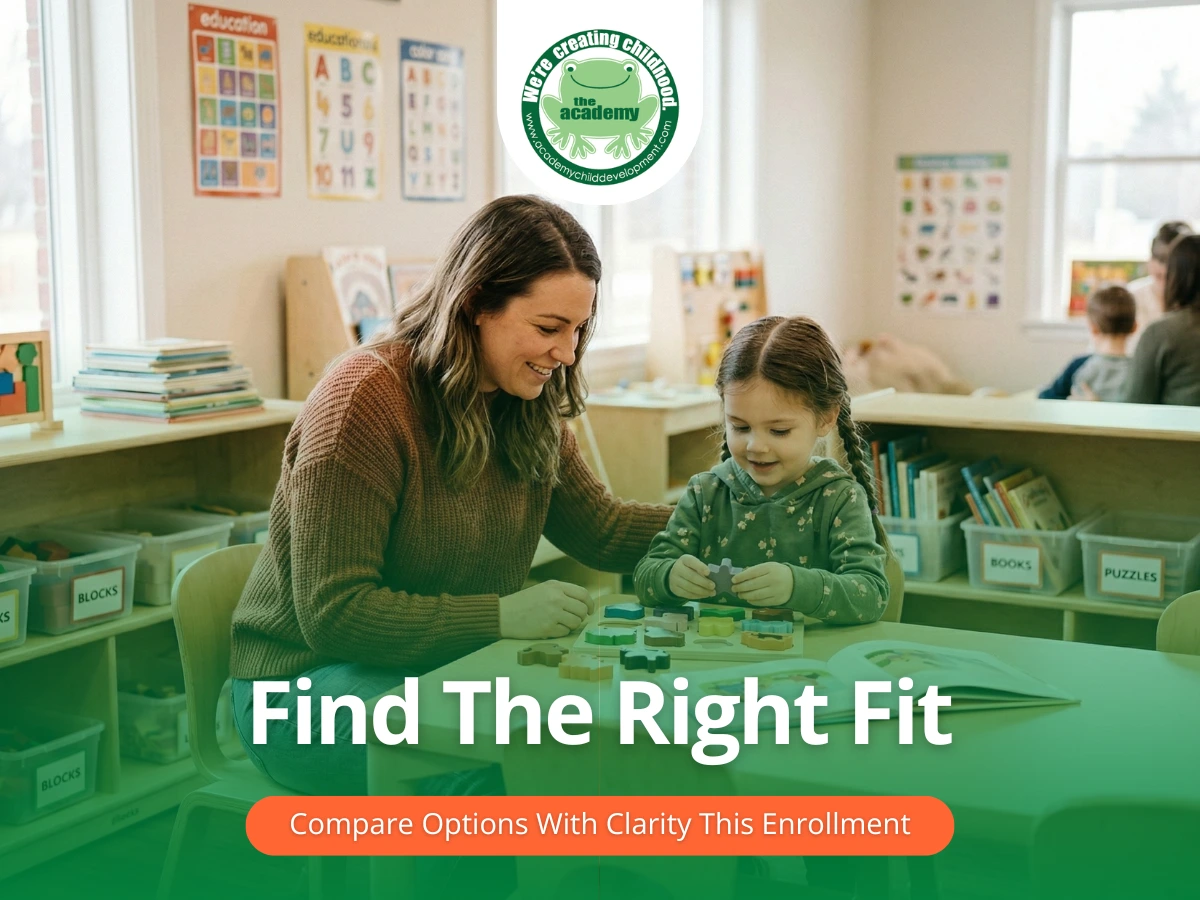
Evaluating preschool options in the new year often comes with added urgency, since many families begin searching after the holidays, and openings can fill quickly. A strong decision is based on more than convenience. The right program should match your child’s developmental needs, your family’s daily schedule, and the level of structure and communication you expect. Using a consistent approach during tours and follow-up conversations can help you compare schools with clarity.
Start With Your Child’s Age, Temperament, And Needs
A preschool that works well for one child may not be the right fit for another. Consider how your child typically responds to new environments and routines. During your evaluation, note whether the program supports:
- Gentle transitions for children who need time to warm up
- Structured routines for children who thrive with predictability
- Opportunities for movement, sensory play, and hands-on learning
- Small-group engagement and individualized attention
A strong program should be prepared to discuss how teachers support different learning styles and developmental stages.
Compare Learning Approach And Daily Structure
Preschool quality is closely tied to how learning happens throughout the day. Ask for a clear description of their curriculum and observe whether activities feel intentional. Look for a balance that includes guided learning, purposeful play, outdoor time, and rest. When comparing options, it may help to rate each program on:
- Curriculum clarity and developmental alignment
- Variety of activities, including art, music, and early literacy
- Classroom organization and child independence routines
- Teacher engagement during learning centers and transitions
Programs that can explain the why behind their approach often have stronger consistency.
Look For Signs Of Strong Leadership And Stable Staffing
The new year is a good time to confirm how the center maintains quality in the long term. Ask who leads the program day to day and how teachers are supported. Stable staff usually reflects clear expectations, strong training, and a positive work culture. During a tour, notice whether classrooms feel calm, supervised, and well-managed.
Consider Practical Fit Without Compromising Quality
Schedule, location, and budget matter, but they should support a quality experience, not replace it. Review tuition details, hours, and enrollment timing, then weigh them against the program’s strengths in safety, curriculum, and communication.
When you evaluate with both practical needs and developmental priorities in mind, you are more likely to choose a preschool that supports a smooth start and steady growth throughout the year.
Health, Safety, And Cleanliness Standards To Confirm
Health, safety, and cleanliness should be easy to verify during a tour because strong programs follow clear routines and consistent policies every day. When touring in the new year, these standards matter even more due to seasonal illness trends and increased enrollment activity. A well-run center will explain procedures confidently and demonstrate them through the environment and staff behavior.
Entry Security And Supervision Practices
Start by confirming how the building is secured and how children are supervised from arrival to pick-up. Look for controlled access at the front entrance, clear sign-in procedures, and staff who remain attentive during transitions. A strong program should be able to describe how they manage authorized pick-up, visitor protocols, and playground supervision without hesitation.
Clean Classroom Systems You Can See
Cleanliness is not only about appearance. It is about routines and accountability. During your walkthrough, observe whether:
- Toys and learning materials look well-maintained and regularly sanitized
- Diapering and restroom areas are separated from food prep and eating areas
- Floors, tables, and high-touch surfaces are clean and organized
- Handwashing is built into the schedule, not treated as optional
Ask how often classrooms are sanitized, how cleaning responsibilities are assigned, and what steps are taken after illness exposure.
Illness Policies And Return-To-Care Guidelines
A clear illness policy protects children, families, and staff. Confirm how the center handles fevers, vomiting, contagious conditions, and symptom monitoring during the day. It is also important to ask about return-to-care requirements, including whether children must be symptom-free for a set period or provide doctor clearance when needed. Strong programs communicate these policies consistently, even when it is inconvenient.
Emergency Preparedness And Staff Training
Safety also includes readiness. Ask how staff are trained for emergencies and how often drills are practiced. Key topics to confirm include:
- CPR and First Aid training requirements
- Fire, severe weather, and lockdown procedures
- Incident documentation and parent notification processes
- Allergy protocols and medication handling
Programs that take preparedness seriously will provide clear answers and documented procedures.
Food Safety And Allergy Awareness
If meals or snacks are served, ask how food is prepared, stored, and handled in the classroom. Confirm how allergies are communicated across staff and how exposure risks are reduced. Look for posted allergy information where appropriate and staff who understand safe meal routines.
When a center is consistent with health and safety standards, it shows in daily habits, clear policies, and an environment designed to protect children while supporting learning and care.
Conclusion
Touring a child care center in the new year is an opportunity to look beyond first impressions and confirm what daily care and learning truly look like. The strongest programs combine clear safety practices, consistent routines, engaged teachers, and transparent communication that supports families from enrollment through each stage of development. When you arrive prepared with a checklist, ask focused questions, and compare options using the same standards, you can choose a setting that aligns with your child’s needs and your expectations for quality. A thoughtful tour helps turn a busy enrollment season into a confident decision.
Schedule your tour today. Call 615-805-6676 or visit https://www.academychilddevelopment.com/contact/.