What To Look For When Touring A Child Care Center In The New Year
Child care tour tips for new year enrollment can help families make a confident decision during one of the busiest times of year for childcare inquiries. A well-planned tour gives you a clear view of what daily life in the classroom looks like, how teachers interact with children, and how the program supports safety, learning, and communication with families.
It also helps you compare options more effectively, especially when openings can fill quickly after the holidays. By knowing what to look for and what questions to ask, you can focus on the details that matter most for your child’s comfort, growth, and long-term success.
Daycare Tour Checklist For A Strong First Impression

A tour is often the clearest way to understand how a child care center operates day to day. The goal is not to evaluate a perfect classroom moment, but to confirm that the environment is safe, supportive, and well-run. Use this daycare tour checklist to stay focused during your visit and leave with the information you need to compare programs confidently.
Before You Arrive: Prepare For A Productive Visit
A few simple steps can help you get more value from the tour:
- Schedule a time when children are present, not during downtime
- Bring a short list of priorities for your child’s age and needs
- Plan to observe, take notes, and ask follow-up questions
If your child is touring with you, pay attention to how staff engage and support their comfort in a new space.
What To Notice As You Walk Through The Center
First impressions matter because they often reflect daily systems. As you move through the building, look for signs of structure and care:
- A secure entry process and clear check-in procedures
- Clean classrooms with organized learning areas
- Staff actively supervising, not watching from a distance
- Calm transitions between activities, not constant chaos
- Children engaged in play, learning, and interaction
The overall tone should feel steady and welcoming, even in a busy room.
Classroom Details That Reflect Quality
Small details often reveal how intentional the program is. Look for:
- Age-appropriate materials within children’s reach
- Visual schedules, labeled spaces, and consistent routines
- Teachers speak kindly and guide behavior with patience
- Opportunities for hands-on learning, movement, and creativity
Ask yourself whether the classroom feels designed for children to learn and explore, not simply to pass the time.
Take Notes On Communication And Next Steps
A strong center will explain expectations clearly and provide straightforward information. Before leaving, confirm:
- How updates are shared with families and how often
- What the enrollment timeline looks like for the new year
- Which documents or requirements are needed to hold a spot
A well-run tour should leave you with clarity. When a center is organized, transparent, and child-focused, it typically shows in both the environment and the way the team communicates.
Questions To Ask Child Care Center Staff During Your Visit

A child care tour is the right time to ask specific questions that reveal how the center supports children, communicates with families, and manages daily routines. Strong programs are prepared to answer clearly and consistently. These questions to ask child care center staff can help you move beyond general statements and understand what your child’s experience may look like throughout the day.
Classroom Experience And Daily Routines
Ask questions that clarify what children do and how the day is structured:
- What does a typical day look like for this age group?
- How do you support transitions between activities, meals, and rest?
- How much outdoor time do children get each day, weather permitting?
- How do you support children who are new or having separation anxiety?
Look for answers that include consistent routines and developmentally appropriate expectations.
Teacher Qualifications, Ratios, And Continuity
Staffing is one of the strongest indicators of quality. Consider asking:
- What are your teacher-to-child ratios in each classroom?
- What training and certifications do teachers complete?
- How do you support staff retention and consistency for children?
- Who covers the classroom when a teacher is absent?
Programs that prioritize stability typically have clear systems for staffing, supervision, and ongoing training.
Guidance, Behavior Support, And Social Development
It is important to understand how the center supports behavior and emotional growth:
- How do teachers handle challenging behaviors or conflict between children?
- What does positive guidance look like in your classrooms?
- How do you help children build social skills such as sharing and taking turns?
- How do you communicate concerns about behavior or development to parents?
Strong programs should describe calm, respectful strategies that teach skills rather than punish.
Health, Safety, And Illness Policies
New year enrollment often coincides with cold and flu season, so clarity matters. Ask:
- What are your cleaning and sanitizing routines?
- What is your illness policy, and when can children return?
- How do you handle medication, allergies, and emergencies?
- What safety procedures are in place for drop-off, pick-up, and visitors?
Family Communication And Enrollment Logistics
Before you leave, confirm the details that affect your planning:
- How do teachers share daily updates and developmental progress?
- What is the enrollment process and timeline for the new year?
- Are there registration fees, deposits, or required documentation?
Clear answers signal a well-managed program. When staff communicate confidently and consistently, families are more likely to feel informed, supported, and prepared for a successful start.
Evaluating Preschool Options For The Right Fit In The New Year

Evaluating preschool options in the new year often comes with added urgency, since many families begin searching after the holidays, and openings can fill quickly. A strong decision is based on more than convenience. The right program should match your child’s developmental needs, your family’s daily schedule, and the level of structure and communication you expect. Using a consistent approach during tours and follow-up conversations can help you compare schools with clarity.
Start With Your Child’s Age, Temperament, And Needs
A preschool that works well for one child may not be the right fit for another. Consider how your child typically responds to new environments and routines. During your evaluation, note whether the program supports:
- Gentle transitions for children who need time to warm up
- Structured routines for children who thrive with predictability
- Opportunities for movement, sensory play, and hands-on learning
- Small-group engagement and individualized attention
A strong program should be prepared to discuss how teachers support different learning styles and developmental stages.
Compare Learning Approach And Daily Structure
Preschool quality is closely tied to how learning happens throughout the day. Ask for a clear description of their curriculum and observe whether activities feel intentional. Look for a balance that includes guided learning, purposeful play, outdoor time, and rest. When comparing options, it may help to rate each program on:
- Curriculum clarity and developmental alignment
- Variety of activities, including art, music, and early literacy
- Classroom organization and child independence routines
- Teacher engagement during learning centers and transitions
Programs that can explain the why behind their approach often have stronger consistency.
Look For Signs Of Strong Leadership And Stable Staffing
The new year is a good time to confirm how the center maintains quality in the long term. Ask who leads the program day to day and how teachers are supported. Stable staff usually reflects clear expectations, strong training, and a positive work culture. During a tour, notice whether classrooms feel calm, supervised, and well-managed.
Consider Practical Fit Without Compromising Quality
Schedule, location, and budget matter, but they should support a quality experience, not replace it. Review tuition details, hours, and enrollment timing, then weigh them against the program’s strengths in safety, curriculum, and communication.
When you evaluate with both practical needs and developmental priorities in mind, you are more likely to choose a preschool that supports a smooth start and steady growth throughout the year.
Health, Safety, And Cleanliness Standards To Confirm
Health, safety, and cleanliness should be easy to verify during a tour because strong programs follow clear routines and consistent policies every day. When touring in the new year, these standards matter even more due to seasonal illness trends and increased enrollment activity. A well-run center will explain procedures confidently and demonstrate them through the environment and staff behavior.
Entry Security And Supervision Practices
Start by confirming how the building is secured and how children are supervised from arrival to pick-up. Look for controlled access at the front entrance, clear sign-in procedures, and staff who remain attentive during transitions. A strong program should be able to describe how they manage authorized pick-up, visitor protocols, and playground supervision without hesitation.
Clean Classroom Systems You Can See
Cleanliness is not only about appearance. It is about routines and accountability. During your walkthrough, observe whether:
- Toys and learning materials look well-maintained and regularly sanitized
- Diapering and restroom areas are separated from food prep and eating areas
- Floors, tables, and high-touch surfaces are clean and organized
- Handwashing is built into the schedule, not treated as optional
Ask how often classrooms are sanitized, how cleaning responsibilities are assigned, and what steps are taken after illness exposure.
Illness Policies And Return-To-Care Guidelines
A clear illness policy protects children, families, and staff. Confirm how the center handles fevers, vomiting, contagious conditions, and symptom monitoring during the day. It is also important to ask about return-to-care requirements, including whether children must be symptom-free for a set period or provide doctor clearance when needed. Strong programs communicate these policies consistently, even when it is inconvenient.
Emergency Preparedness And Staff Training
Safety also includes readiness. Ask how staff are trained for emergencies and how often drills are practiced. Key topics to confirm include:
- CPR and First Aid training requirements
- Fire, severe weather, and lockdown procedures
- Incident documentation and parent notification processes
- Allergy protocols and medication handling
Programs that take preparedness seriously will provide clear answers and documented procedures.
Food Safety And Allergy Awareness
If meals or snacks are served, ask how food is prepared, stored, and handled in the classroom. Confirm how allergies are communicated across staff and how exposure risks are reduced. Look for posted allergy information where appropriate and staff who understand safe meal routines.
When a center is consistent with health and safety standards, it shows in daily habits, clear policies, and an environment designed to protect children while supporting learning and care.
Conclusion
Touring a child care center in the new year is an opportunity to look beyond first impressions and confirm what daily care and learning truly look like. The strongest programs combine clear safety practices, consistent routines, engaged teachers, and transparent communication that supports families from enrollment through each stage of development. When you arrive prepared with a checklist, ask focused questions, and compare options using the same standards, you can choose a setting that aligns with your child’s needs and your expectations for quality. A thoughtful tour helps turn a busy enrollment season into a confident decision.
Schedule your tour today. Call 615-805-6676 or visit https://www.academychilddevelopment.com/contact/.
What to Expect in a High-Quality Child Development Program
High-quality child development programs offer families a trusted foundation for learning, safety, and daily support. In the right environment, children benefit from consistent routines, caring educators, and age-appropriate activities that strengthen social, emotional, and cognitive growth.
Parents can also expect clear communication, thoughtful classroom structure, and a curriculum designed to build early skills through play and guided instruction. From cleanliness standards to intentional learning spaces, quality shows up in the small details that shape a child’s experience each day. Understanding what defines excellence can help you choose a program that aligns with your child’s needs and your family’s values.
What Makes A Quality Childcare Program Stand Out
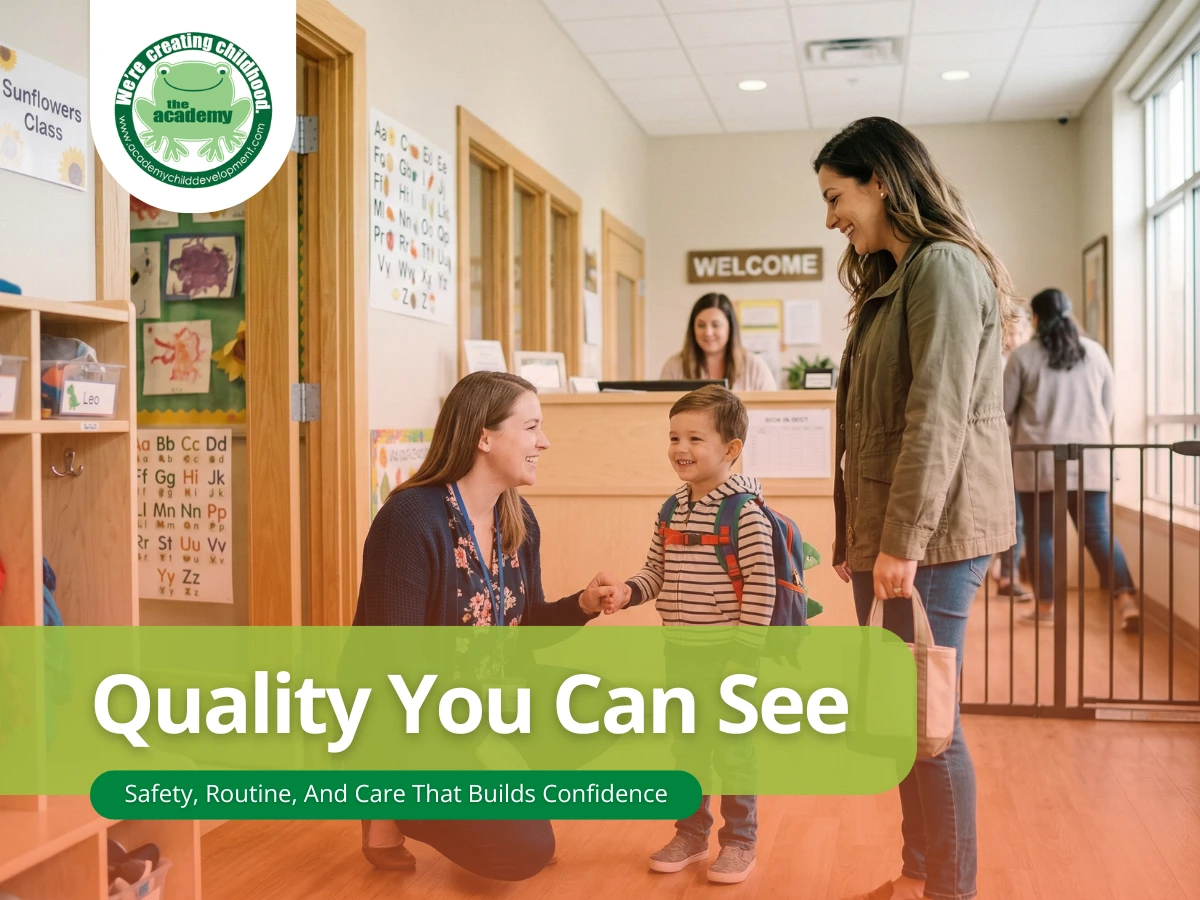
A quality childcare program stands out for delivering consistency, safety, and meaningful learning throughout the day. It is not defined by a single feature, but by how well the program supports children’s development while earning parents’ trust through clear standards and dependable care.
A Safe, Healthy Environment With Clear Standards
High-quality programs follow strict safety procedures that are visible in daily routines. Classrooms are clean, materials are regularly sanitized, and drop-off and pick-up processes are organized. Strong programs also maintain appropriate child-to-teacher ratios, create secure play spaces, and ensure staff are trained in health and emergency protocols.
Educators Who Know Children And Support Their Growth
Quality begins with the people in the classroom. Teachers should be qualified, supported, and consistent so that children can build secure relationships. Families can expect educators who observe development, respond with patience, and use guidance that helps children learn social skills, emotional regulation, and independence.
Daily Structure That Balances Learning And Play
A strong program includes a predictable rhythm that helps children feel confident and engaged. Look for a schedule that includes:
- Guided learning activities and small-group instruction
- Outdoor play and movement each day
- Meals and rest that match age and developmental needs
- Time for creativity, exploration, and peer interaction
The goal is a balanced day where children learn through play and intentional teaching, not a rigid academic approach.
Communication That Keeps Parents Informed
Quality programs treat parents as partners. They communicate consistently and professionally, including updates on daily routines, milestones, and classroom learning. Clear policies, timely responses, and transparent expectations help families feel informed, supported, and confident in their child’s care.
When these elements work together, children benefit from a stable environment where learning feels natural, relationships are strong, and each day supports healthy development.
Benefits Of Early Childhood Development Programs For Growing Minds
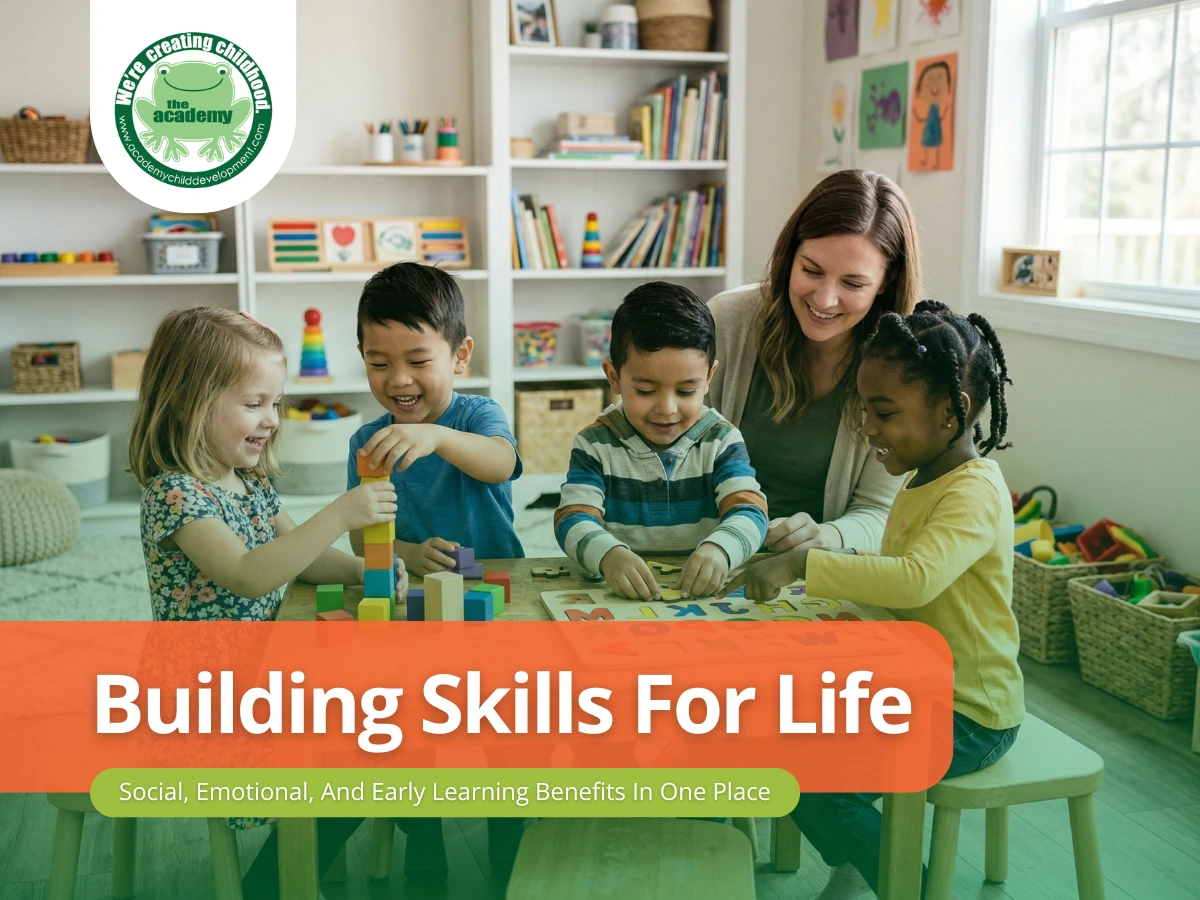
Early childhood development programs support more than early academics. They help children build the skills that shape how they learn, relate to others, and navigate new experiences. When a program is designed with intentional routines and age-appropriate guidance, children gain confidence that carries into kindergarten and beyond.
Stronger Social And Emotional Skills
Children learn how to participate in a group, express needs appropriately, and respond to boundaries with support. Over time, they practice skills such as:
- Taking turns and sharing materials
- Managing big feelings with teacher guidance
- Building empathy through friendship and cooperative play
- Developing patience and listening skills
These are foundational abilities that improve classroom readiness and daily well-being.
Early Communication, Language, And Literacy Growth
High-quality programs provide frequent opportunities for conversation, storytelling, music, and early reading. Children benefit from hearing rich vocabulary, asking questions, and learning how to communicate ideas clearly. This supports language development while strengthening attention, comprehension, and early literacy awareness in a natural, developmentally appropriate way.
Cognitive Skills Through Play And Exploration
A strong program uses hands-on learning to build problem-solving and critical thinking. Children engage in activities that encourage curiosity, experimentation, and persistence, including puzzles, sensory materials, building centers, simple science exploration, and art. These experiences help children learn how to focus, try again after frustration, and follow steps toward a goal.
Independence And Practical Life Readiness
Daily routines teach children how to care for themselves and contribute to the classroom community. With consistent support, children practice skills such as washing hands, cleaning up after activities, choosing materials, and following multi-step directions. These moments develop responsibility, self-control, and confidence.
A Smoother Transition Into Kindergarten
Children who have experienced a well-structured early childhood setting often enter kindergarten with familiarity with classroom routines, group participation, and learning expectations. They are more prepared to:
- Separate from caregivers with confidence
- Follow the teacher’s direction in a group setting
- Participate in early learning activities with stamina
- Adapt to new environments and expectations
When early childhood development programs prioritize the whole child, children gain skills that support learning, relationships, and long-term growth.
Features Of A Great Preschool Program That Parents Notice
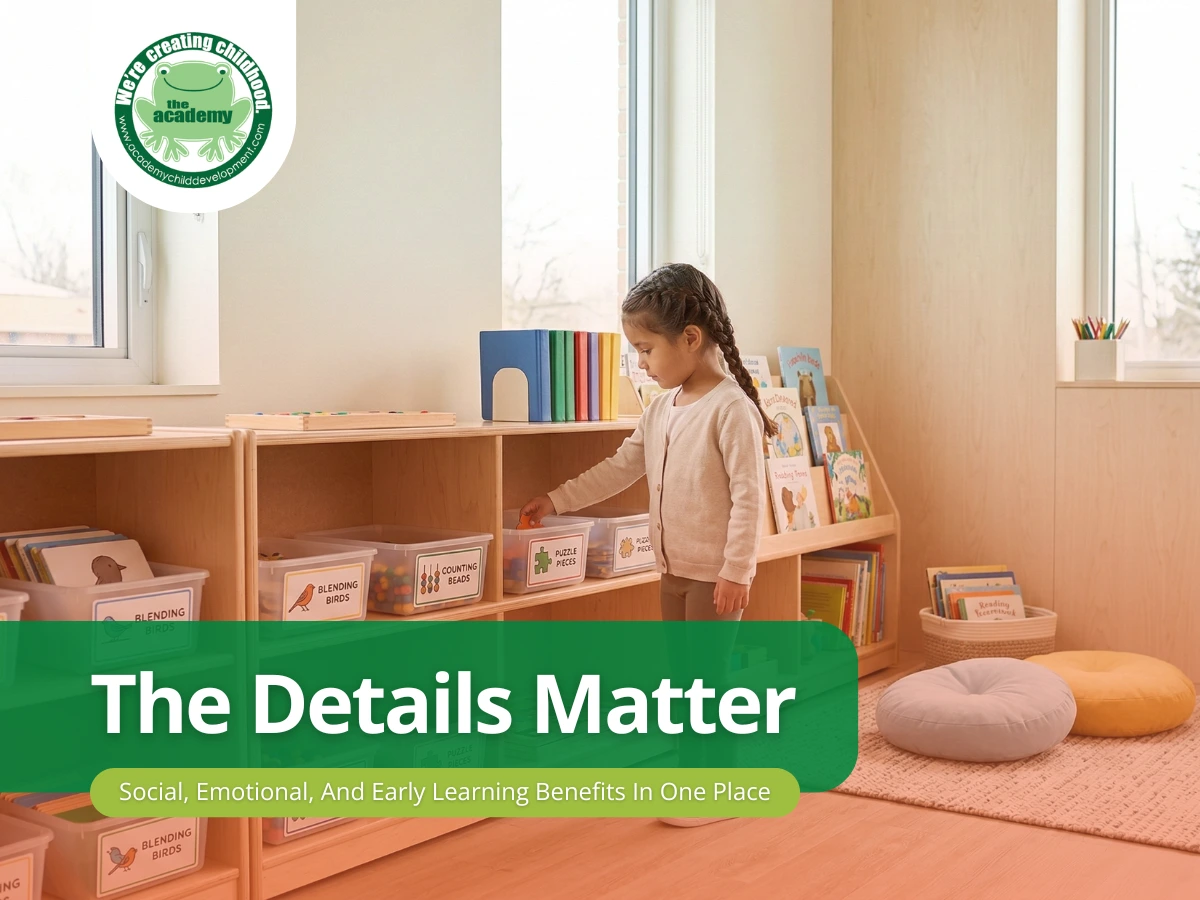
Parents often notice the difference in a preschool program within the first few minutes of a visit. A great program feels organized, calm, and purposeful, with teachers who are engaged and children who are supported. While every school has its own approach, high-quality programs share common features that consistently show up in the classroom experience.
Warm, Responsive Teacher Child Interactions
A strong preschool program is defined by the people leading it. Parents tend to notice teachers who speak respectfully, listen closely, and guide children with patience. Quality interactions include positive redirection, encouragement, and clear expectations that help children feel safe while learning appropriate behavior.
A Balanced Day With Purposeful Play
Great programs do not rely on worksheets or rigid instruction. They use play as a learning tool while still providing structure and goals. A well-planned day typically includes:
- Small-group learning to build early literacy and math readiness
- Centers that support creativity, problem-solving, and social play
- Outdoor time for movement and exploration
- Quiet moments for rest, reading, or independent activities
This balance supports attention, emotional regulation, and steady skill development.
A Classroom Environment Designed For Learning
Parents often look for classrooms that are clean, organized, and set up for independence. Materials should be accessible, age-appropriate, and rotated with intention. Clear learning areas, labeled supplies, and inviting displays signal that the environment supports children’s curiosity and self-direction.
Developmental Milestones And Real School Readiness
Features of a great preschool program include clear learning objectives that align with how children develop. Readiness is not only academic. It includes language growth, self-help skills, early problem-solving, and the ability to participate in a group. Strong programs track progress through observation and provide support when children need extra guidance.
Consistent Communication With Families
Parents notice when a program treats families as true partners. High-quality preschools provide clear policies, regular updates, and meaningful insight into a child’s growth. Communication may include daily notes, photos, weekly learning highlights, and timely conversations when questions arise.
When these features come together, preschool becomes more than childcare. It becomes a stable, supportive setting where children build confidence, relationships, and the skills needed for long-term success.
Child Development Curriculum Benefits That Support Long-Term Growth
A strong early learning curriculum does more than fill the day with activities. It provides a clear, developmentally appropriate framework that helps children build skills step by step. When curriculum is intentional, children benefit from consistent teaching methods, meaningful practice, and learning experiences that support long-term growth across academic, social, and practical areas.
Whole-Child Learning, Not One-Size-Fits-All
Quality curriculum supports the full range of early development. It strengthens early academics while also building independence, self-regulation, and healthy relationships. Children learn best when lessons match their age and stage, so strong programs use observation and flexible pacing rather than pushing skills before children are ready.
Skills That Build A Strong Foundation For School
The benefits of a child development curriculum are most evident in how children approach learning. Instead of memorizing, children practice thinking, listening, and problem-solving. A well-designed curriculum typically supports:
- Early language and literacy through stories, conversation, and letter awareness
- Early math concepts such as counting, patterns, and simple measurement
- Attention and memory through games, routines, and guided instruction
- Curiosity and reasoning through hands-on exploration
These early foundations help children participate more confidently in future classroom settings.
Social-Emotional Growth Embedded Into Daily Learning
Curriculum should include daily opportunities to practice communication, empathy, and cooperation. Group activities, guided play, and teacher modeling help children learn how to express feelings, work through frustration, and build friendships. These skills often influence long-term success as much as academic readiness.
Consistency Across Classrooms And Age Levels
A strong curriculum creates alignment, so children experience steady progression as they move through age groups. This consistency helps reduce transitions and builds confidence because children understand expectations and routines. It also allows educators to identify skill gaps early and provide structured support.
Learning That Extends Beyond The Classroom
The best curriculum connects learning to real life. Children gain independence through everyday routines, hands-on tasks, and classroom responsibilities. This can include cleaning up, following directions, practicing personal care skills, and participating in simple group roles. Over time, these experiences build responsibility, perseverance, and confidence.
When curriculum is thoughtfully designed and well delivered, it becomes a long-term investment in a child’s ability to learn, adapt, and thrive.
Conclusion
Choosing the right early learning environment is a meaningful decision because it shapes a child’s daily experiences, relationships, and confidence during the years of rapid development. A high-quality program stands out through consistent safety standards, skilled educators, and a balanced approach that supports learning through play, routine, and purposeful instruction. Strong preschool experiences also build social-emotional growth, independence, and early academic readiness in ways that feel natural and age-appropriate. When curriculum is intentional, and communication is steady, families gain clarity and trust, and children gain the stability they need to thrive now and in the years ahead.
Ready to take the next step? Call 615-805-6676 or visit https://www.academychilddevelopment.com/contact/ to schedule a tour and learn more.
Quality Infant Care at The Academy
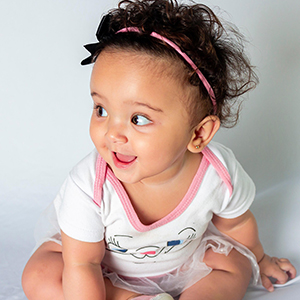
At The Academy, our youngest learners aren’t simply being watched — they’re being nurtured and taught. The quality infant care we provide sets the standard in the industry. From the moment babies enter our program, we recognize that every coo, gesture and glance is an opportunity for learn.
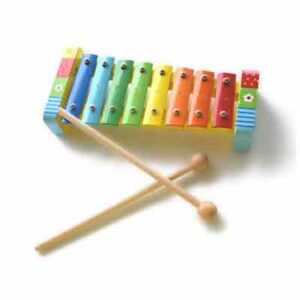
Singing gentle lullabies, tapping soft rhythms, and incorporating age-appropriate instruments allow infants to sense patterns in sounds, build foundational listening skills, and engage emotionally with their caregivers.
Why Music Matters for Infants
Babies are born to respond to the beat and flow of music. When infants hear a recurring rhythm or a phrase sung, their brains begin to identify patterns. They begin to recognize patterns in tone, in timing, and in emotion.
Music supports early language development by helping babies distinguish syllables, stress and inflection. Meanwhile, gentle rhythms draw attention, calm the nervous system and invite connection.
By integrating music into our daily routines our infant-room create an environment where babies feel safe, stimulated and heard. These musical moments become subtle teaching tools that strengthen listening, spark social awareness, and build comfort with sound cues.
Music also offers a calming structure. A familiar song before nap or during transitions helps infants understand the routine without needing words. They begin to anticipate the rhythm and feel secure, which supports emotional regulation and strengthens their sense of belonging.
How We Make It Real at The Academy
At The Academy, our infant-room curriculum places music and rhythm at the heart of early learning. We don’t treat babies as passive recipients. We engage them with songs, soft instruments, and intentional rhythm cues that reflect their developmental stage.
Whether it’s a welcome-song greeting, a drum-tapping activity or a lullaby before nap, music and rhythm power our subtle teaching, and help your child grow every day in language, attention and emotional security. If you’d like to learn more about The Academy in Nashville, Brentwood, Spring Hill or beyond, contact us today or click a link below:
Academy Curriculum
Enrichment Programs
Pre-K Programs
Seasonal Programs
The Academy Preschools Help Children Navigate Stress
 The holidays that are fast upon us are often filled with joy, but for preschool and daycare-aged children, they can also bring new stress. From Halloween costumes to Thanksgiving gatherings and December celebrations, kids may feel overwhelmed. During holidays, routines shift and emotions can run high. They may need extra support at preschool and at home. The Academy Preschools know just how to help children navigate stress during holidays.
The Academy Preschools Know How to Celebrate
At our daycare, we focus on making holidays fun and manageable for young children, blending learning with celebration. Celebrations at this age are less about perfection and more about connection.
Young children rely on predictability to feel safe. So, we keep classroom celebrations simple and familiar. When routines change and expectations grow, stress can show up as clinginess, tantrums, or fatigue. Recognizing these signs early allows us as caregivers to respond with patience and reassurance.
Some Tips for Parents
Understanding the challenges of holidays for our little ones helps us guide them through the holiday seasons with care. Together, we can help your child embrace the magic of the season with confidence and joy.
Halloween: Excitement and Anxiety
Costumes, candy, and decorations are thrilling, but also confusing. Scary costumes, loud parties or too much sugar can lead to meltdowns. Parents can ease stress by choosing comfortable costumes, practicing at home, and keeping trick-or-treating short and sweet.
Thanksgiving: Big Crowds and Big Feelings
Large family gatherings can overwhelm preschoolers. Strange foods, busy kitchens, and new faces may spark anxiety. Preparing your child ahead of time helps. Explain who they’ll see, what foods will be there, and where they can take a break. Offering a familiar snack alongside the turkey can also give comfort.
Christmas and Hanukkah: Too Much, Too Fast
December holidays bring bright lights, gifts, and nonstop activity. For young children, this sudden burst of change can be overstimulating. Skipped naps, late nights, and too many sweets often add up to cranky moods. Parents can help by protecting core routines like bedtime and snack time.
The Academy Seasonal Programs
The Academy is not just for kids…it’s for your WHOLE family. In addition to the October through December holidays, we celebrate with other family-oriented seasonal programs. Learn more about our seasonal programs.
Franklin’s Premiere Daycare Teaches with Music and Movement
As Franklin’s premiere daycare center, The Academy uses many tools for teaching preschoolers. And we are always seeking innovative ways to enhance the learning process. Among the most compelling new learning discoveries is the impact that music and movement have on cognitive development.
 The Cognitive Benefits of Music
Without a doubt, music enriches classroom experiences. But it also plays a pivotal role in sharpening cognitive skills, improving memory, and fostering creativity.
Studies show that children exposed to music exhibit superior language skills, better memory retention, and heightened spatial-temporal reasoning. The act of listening to or performing music engages multiple areas of the brain, forging new neural connections and strengthening existing ones.
The Power of Movement in Learning
Kinesthetic learning—learning through movement—is particularly effective for young children, helping them to internalize new concepts through hands-on experiences.
Activities such as dance, sports, or simple classroom exercises are very valuable. Movement improves physical health and boosts concentration, memory, and executive function. A child who jumps while counting, for instance, is more likely to remember numbers and sequences because their body is actively involved in the learning process.
Synergy Between Music and Movement
When you combine music and movement, their cognitive benefits are amplified. In our classrooms, we incorporate singing with actions or rhythmic clapping to create multisensory learning experiences. This aids retention and recall.
Dance is another good example of the synergy between music and movement. It marries rhythm and physical coordination, challenging the brain to process tempo, melody, and spatial awareness simultaneously.
Learn More about Franklin’s Premiere Daycare
The Academy has five locations in Franklin, TN. Additionally, The Academy has twelve more locations scattered across Nashville, Brentwood, Spring Hill, Murfreesboro, Hendersonville, Mt. Juliet, and Nolensville.
All of our locations provide children the highest quality preschool education in a fun and safe environment. You can have peace of mind that your child is receiving the best possible care.
The Best Daycare Near You: How We Handle Challenging Behavior
Managing challenging behaviors in a classroom of preschoolers is a nuanced and essential part of fostering a positive and nurturing learning environment. The Academy, the best daycare facility near you, knows behavioral challenges are normal during young children’s development.
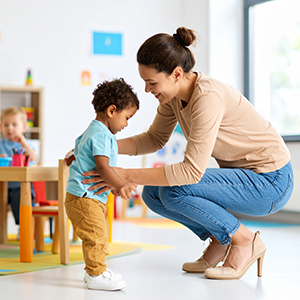 Undeveloped social and emotional skills can cause occasional conflicts. At our daycare center, we embrace these moments as opportunities for growth and learning, employing thoughtful strategies to guide children toward positive behavior and healthy conflict resolution.
Understanding the Roots of Challenging Behavior
Challenging behaviors may stem from frustration, anxiety, or unmet needs. Our daycare center trains staff to observe and identify triggers for behavioral challenges, whether they involve difficulty sharing, trouble with transitions, or sensitivity to sensory stimuli. By understanding the root causes, we can tailor our approach to meet each child’s unique needs.
Strategies for Managing Conflict and Promoting Positive Behavior
1. Social-Emotional Learning
One of our central strategies is integrating social-emotional learning into daily activities and curriculum. We teach preschoolers to identify and express their emotions, understand empathy, and practice kindness toward peers. Simple activities, such as storytelling or role-playing, encourage children to navigate social interactions constructively.
2. Setting Clear Expectations
Consistency and clarity are key. Our classrooms establish clear rules and routines that are reinforced regularly. When children understand what is expected of them, they feel secure and are more likely to follow guidelines.
3. Positive Reinforcement
Rather than focusing solely on correcting negative behavior, we emphasize positive reinforcement. Acknowledging and celebrating moments of kindness, cooperation, and patience encourages children to repeat these behaviors.
4. Conflict Resolution Techniques
We teach preschoolers age-appropriate conflict resolution techniques, such as using words to express their feelings, taking turns, or seeking help from a teacher when needed. These tools empower children to handle disagreements independently and with confidence.
The Best Daycare Near You Is One of Our 17 Locations
The Academy has locations throughout Middle Tennessee. Find the location nearest you.
Academy Kindergarten Bootcamp-Transitioning from Daycare to Kindergarten
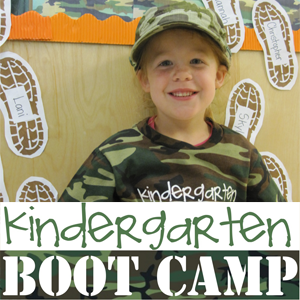 As summer approaches, many parents start to contemplate their child’s readiness for kindergarten. The transition from daycare to kindergarten is a significant milestone in a child’s life, marking the beginning of formal education. It is crucial to ensure that children are ready to embrace this new chapter in their educational journey. The Academy Kindergarten Bootcamp prepares children for their next big step.
Importance of The Academy Kindergarten Bootcamp
The gap between preschool and kindergarten is significant, as children encounter new expectations and social dynamics. Our summer program addresses this gap by providing tailored activities that promote academic readiness and social-emotional development. Our summer readiness program enhances children’s foundational skills in a fun and engaging way. This makes the transition smoother and less intimidating.
Our Pre-K Program Focuses on Learning Skills
Our summer program focuses on several key areas to ensure that children are ready for the academic and social demands of kindergarten. Key skill areas include:
- Literacy and Language Development
During the bootcamp, activities such as story time, phonics games, and letter puzzles help develop early literacy skills. Fun activities, like singing alphabet songs or engaging in storytelling crafts, make this learning enjoyable and memorable.
- Mathematics Readiness
Bootcamp participants may explore counting through games, measure objects with non-standard units, and engage in fun group activities that encourage pattern recognition and number sense. These early math experiences teach children to see numbers in their everyday lives.
- Social Skills and Teamwork
Our summer provide children with ample opportunities to interact with their peers, fostering essential social skills. Through structured group activities, such as cooperative games and team projects, children learn to communicate effectively, share, and resolve conflicts.
The Academy Kindergarten Bootcamp Also Stresses Routine and Structure
A key aspect of transitioning to kindergarten is understanding and adapting to a structured routine. Summer bootcamps often mimic the daily schedule of a kindergarten classroom, helping children become accustomed to organized activities, quiet times, and transitions between tasks. This familiarity can significantly ease anxiety when they start kindergarten.
The Academy Kindergarten Bootcamp Program Fills Up Quickly! Enroll Now.
The Role of Play in Preschools – Understanding STEM Concepts
Play is an essential part of childhood, and its role in education—particularly in STEM learning—is invaluable. Educators recognize the role of play in preschools for understanding mathematical and scientific concepts. This approach is particularly effective in fostering their natural curiosity and enthusiasm for discovery.
The Academy Curriculum Relies Heavily on Hands-on Play
 Play is a fundamental aspect of childhood, serving as a vital avenue through which preschoolers explore, experiment, and make sense of the world around them. The Academy embraces this early educational cornerstone by utilizing a nationally recognized, award-winning curriculum.
Building Foundations through Exploration
Play-based learning enables children to explore their surroundings freely, encouraging them to ask questions and seek answers. This lays the groundwork for scientific thinking.
For instance, when preschoolers engage in activities like building with blocks or playing with water, they are experimenting with principles of physics such as gravity, balance, and buoyancy. These play activities help them understand complex concepts through hands-on experience, making abstract ideas more concrete and accessible.
Encouraging Creativity and Innovation
Creativity is a key aspect of play that significantly enhances STEM learning. When children are given the freedom to explore and experiment during play, they are more likely to come up with innovative solutions to problems.
Activities like role-playing, constructing models, and engaging in imaginative games stimulate creative thinking and allow preschoolers to approach scientific and mathematical challenges with an open mind. This creativity fosters a deeper appreciation for STEM subjects, encouraging a lifelong interest in these fields.
Learn More About the Role of Play in Preschools at One of Our Many Locations
With over 17 locations, we’re pretty sure we have a location near you. Call us today to schedule a tour of one of our locations. See how play-based learning is integrated in our curriculum in a fun and safe environment
Preschool Separation Anxiety Symptoms– How to Manage Them
 At The Academy, we are trained to manage, what we call, preschool separation anxiety. This is a common and natural phase in a young child’s development. It typically occurs at the ages of six months to three years—just when a child may be entering preschool.
Signs and Symptoms of Preschool Separation Anxiety
This condition shows itself when a child experiences distress and fear when separated from their parents. If your child is experiencing separation anxiety, this is what you may experience when you drop off your child at preschool:
- Your child cries or has a tantrum when you try to leave
- Your child clings to you
What we see after you leave may include these behaviors:
- Refusal to participate in activities
- Complaints of physical ailments such as stomachaches or headaches
- Difficulty sleeping taking a nap
The Academy’s Approach to Preschool Separation Anxiety
Our staff is trained to manage separation anxiety with patience, empathy, and consistency. By providing a supportive environment and using effective strategies, we help your child navigate this challenging phase.
To learn more about enrollment, pricing, or scheduling a tour of one of our area preschools please you our convenient request form.
Strategies for Managing Separation Anxiety for Parents
For parents, managing separation anxiety involves a combination of reassurance, gradual separation, and fostering independence. Here are some strategies that can help:
Establish a Routine
A predictable routine can provide a sense of security for young children. Knowing what to expect each day, including when separations will occur, can reduce anxiety. Consistent goodbyes and reunions help children understand that separations are temporary and that their parents will return.
Gradual Departures
Accustom your child to short separations, such as leaving your child with a friend or sitter for an hour. Gradually increase the separation time so that your child becomes more comfortable. This practice helps build trust and confidence in the child that you will return.
Positive Reinforcement
Praise and reward the child for handling separations well. Positive reinforcement encourages them to manage their anxiety and fosters a sense of achievement.
Outdoor Play in Day Care
 We recognize the importance of outdoor activities in day care. Outdoor play in day care is a fantastic way for children to release energy while improving their gross motor skills. Encouraging physical play in an outdoor setting not only boosts children’s health but also strengthens their social bonds and enhances their overall well-being. At The Academy, we have outdoor play time twice a day, weather permitting. Learn more about our daily routines in our Parent Handbook.
We Invest in Outdoor Play in Day Care with Top Notch Outdoor Playground Equipment
Physical play, both indoors and outdoors, is essential for young children. Play supports their physical development, enhances social skills, and encourages creativity. That why all of our locations have professional playground equipment.
Outdoor Activities that You Can Do at Home
We realize that safe and sturdy playground equipment isn’t always available at or near your home. But don’t let that stop you. Here are two activities that you can do at home to enjoy the outdoors. Remember, the key is to keep the activities light-hearted and playful, allowing the children to enjoy their time while benefiting from the physical exertion.
Scavenger Hunt Walks
Organize a scavenger hunt in your backyard or your neighborhood. Create a list of items that your children must find as you walk along with them. The list can include specific leaves, flowers, or rocks. As they run around searching for each item, they practice bending, reaching, and walking over varied terrains, enhancing their gross motor skills while enjoying the beauty of nature.
Obstacle Courses Are Not Just for Outdoor Play in Day Care
Set up a simple obstacle course using cones, hula hoops, and jump ropes. Children can crawl under things, jump over lines, or balance on planks. This activity encourages them to navigate challenges, which helps improve their balance, coordination, and agility.
Contact The Academy Today for More Information about Our High Quality Day Cares in Middle Tennessee